0:00:05 - Craig Schulze
Okay, everybody, welcome to this week's episode of the one shop movement podcast, where we dive deep into the stories of entrepreneurs, business people, sports stars anyone that's out there making it happen. We have a very special guest with us today. His name is Elliot Mark and he is the founder of a business called recruit fluency which is based in America and was. I guess his background was in the professional sporting arena and he turned that into a business and he works in that space now with athletes and recruiting and he's got a phenomenal business and he's in a coaching space as well and he also has a very, very personal story that he's going to share with us on the episode. There's a lot to learn in that as well. So welcome to the show, elliot.
0:00:51 - Elliot Mark (Guest and Founder of Recruit Fluency)
Thanks so much. It's a pleasure, happy to be here.
0:00:55 - Craig Schulze
Great. I'd also like to invite each guest just to provide a bit more context to my introduction and showcase a bit of your story, and then we'll pick up the conversation from there.
0:01:07 - Elliot Mark (Guest and Founder of Recruit Fluency)
Sounds great. I'm originally from New York, born and raised really, really fantastic childhood and just filled with sports from the beginning in absolute incredible family wanted for nothing. Very fortunate, I got into sports early on and that was my life, always with the ball right. So let's fast forward so we don't get caught up too much. But I started a business called Recruit Fluency and we help high school athletes and their parents navigate the college recruitment process without having to use some of these overpriced, underperforming agencies services.
In the United States, ncsa is like a big one. They're just like a big conglomerate, just really really taking advantage of families as far as finances and things like that. So this business stemmed from a lifetime of being in the soccer space football, if you're overseas, right. I was fortunate to have incredible mentors throughout my youth, guys at the college and the professional levels and Bulls Academy, columbia University, st John's University, delphi, I mean the list could really go on and on. And what I took away from that the most was this education that they were providing me was invaluable and as I looked around, as I was going to college and trying to get recruited, these relationships were paramount, right, there's so much you can do when you're trying to get in front of a coach, in front of an employer, right, there's things that you can do to market yourself, but there's nothing like a backdoor introduction and there's nothing like someone who has coached at a high level, really valuing you as a person and putting their reputation on the line to have you reach your potential. So that was really really an incredible and impactful part of my story.
So I played in college. I was a two-year captain after a really arduous process, right, like everyone else in my program that I played with top D1 schools, which is an anomaly and I was sort of that underdog story Like. I was a very good athlete. So I played basketball. I was thinking of playing Division III very much lower level than soccer, but I didn't have the glitz, the glam, I didn't have the trophies as far as, like the regional state teams and things like that. So it was a bit harder. I needed to really think outside of the box when it came to recruitment, use and leverage these connections, and I did that and from there was a two-year captain. So really just did a phenomenal job to lead others and learn from the guys who have provided me all that value and was an all-American center back and then I was just destroyed with injuries right, really really struggled with chronic pain. I'm 38 now. I've had three back surgeries full fusion just a couple of years ago. So I dealt with that as I was transitioning into coaching. So I never had the opportunity to play at the professional level the highest was Division I, ncaa, and transitioning into coaching was just once again, just another way to keep me involved with the game. So we had a bunch of success there. I was the head of national and international recruitment, I was traveling, I was bringing guys in from Norway, sweden, iceland, spain, literally all over the globe and learning a really interesting side and perspective from that. So that just really sped up everything I wanted to do in life. And I'm still dealing with a bunch of the pain management. So, real quickly, I'll just dive into that.
My adversity was between 25 and 35. Most of that time is a blackout to me in some way, shape or form Because I was heavily addicted to actually codon, heavily addicted to heroin that transitioned and spiraled out of control after the pills weren't available. So I took an incredible opportunity and I felt for a very long time that I squandered it. It took me a long time to really get sober. It took me a really long time to want to, and then it took a lot of surgeries, in my case, to help me be pain free, because that was a big part of my story. As far as just day to day living with that agony, not many people could really understand it unless you've been through it. At least that's my personal feeling. There's different types of pain. If you don't experience that specific type, it's really hard to understand what that person is going through on a deep, deep, compassionate level, that empathy. So once I committed myself to that, I transitioned and I went back into sports. There was that piece that was missing.
Long story short, we created a recruitment agency that is really boutique, really, really personalized in our approach, to make sure that student athletes and parents are getting one the right information to you know, making those networks, having those connections with their target schools, and right now we've been going through some onboarding of our own, scaling up ourselves program and everyone has either played at the college or professional level and has those networks that will, just you know, exponentially increase our, our touch points throughout.
You know divisions one, two and three in the United States, the NCAA. So it's been a fun ride. It's really frustrating, bootstrapping tired thing myself, and there are some days that are that are really tough and there are some days that are absolutely phenomenal. So it's just right in that roller coaster and doing everything I can to just focus on staying in the moment and helping that next family right and that's in recovery and that's something that you know really value and stay true to throughout this ride. So I mean I could go on for hours, but right, but that that's in a nutshell. I appreciate you guys taking the time to listen.
0:08:29 - Craig Schulze
Yeah, look, I think there's a lot to unpack there, and one thing you mentioned before I sort of going to the first point was about the. You only know how it feels by going through the experience yourself and I this conversation with somebody the other day and they were talking about all the new technology out there like AI, copyright in, etc. And I said the one thing that you can never, ever do an AI can never, ever do is actually replicate the human experience in terms of you know, if you've sat there and watch your wife and you're still born baby, I can never do that. You know they can theorize and talk about it, but what you just said about you know you going through the experiences is really being something that you can only really deal with and know how it feels yourself.
The next thing I want to really hone in on is you talk about relationships and this is you know. People would always say, craig, you know, you, you, you. You just focus on building networks. You're building people, and I do have an experience of being a semi professional sports person and somebody who would love to go to the door for me to have a conversation with somebody that could help me get a job or somebody that got me into the professional, the highest level, to spend a week with that football club full time working with their professional. I want you to talk a little bit more to that, about the importance of relationships, because I just think in today's society at starting to go the other way, but conversations and building relationships with people as just such an important part.
0:10:24 - Elliot Mark (Guest and Founder of Recruit Fluency)
Yeah, I completely agree with you. I believe it's going in the opposite way and it's almost as if we are becoming a lot more selfish. One of the things you learn in recovery for those of you guys to you know are out there is like you. Only, you know, keep it by giving it away, right. You know, giving back to community and helping someone who is also in need is the ultimate sacrifice at the end of the day, right, that's why we go through and sponsor people and work together, because it's community. A lot of us we get caught up in. You know what are we doing today. You know what are, what are our stats, what are our achievements, what are our XYZ.
And I think that it's taken a lot of time and and I and I'm not perfect by any means right, but I can now, in the moment, catch myself where I go down that that ego, right, that ego strip of you know, it's about me, it's about the vision, the brand, right, like no, it's really about helping that next person.
And I think what's really important for me has always been with mentors is calling it what it is to write like. Taking the time to put a label on it is been helpful because many times people feel like they're just sucking energy out of you or you know you don't want to be helping in this community. So having conversation, even just around the relationship, to say, hey, I'd love to mentor you through this process I think not many people do that, but having that discussion is so empowering because then that that kid that meet male, female, they're scared to reach out, right, they don't want to feel like they're burdening you. So, yeah, I think that you need relationships. You need to utilize them. You shouldn't be embarrassed about utilizing them and make sure it's a straightforward conversation.
0:12:38 - Craig Schulze
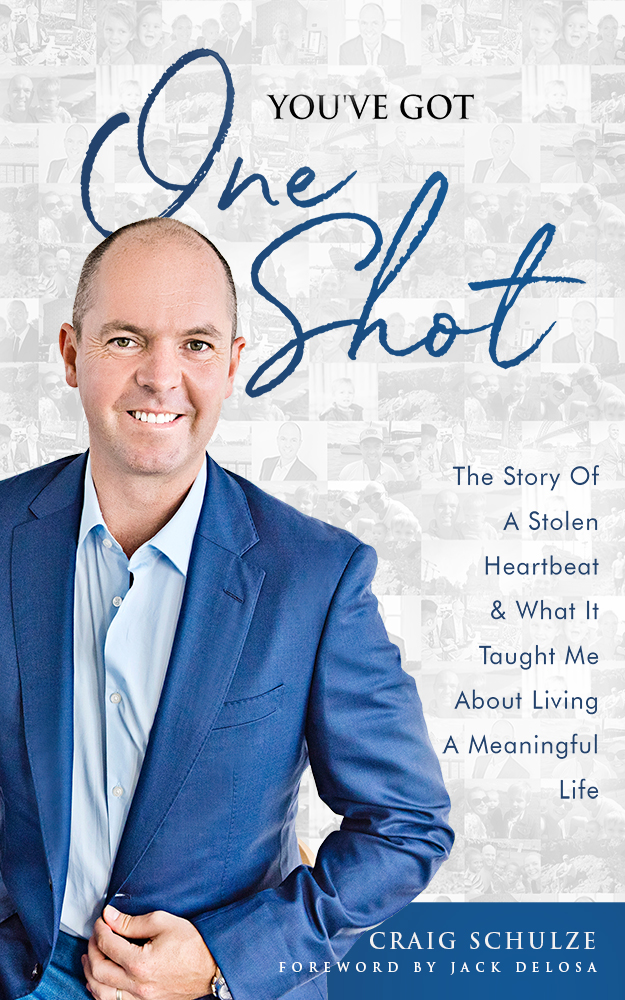
And you touched on mentors there too, which is slightly a different one, and I've you know, in chapter eight of my book I talk about how I found my first mentor, and that was through generosity. I gave away eight basketball tickets to this family that just walked into my business and it just happened to be a highly successful business person that had a corporate box and he taught me how to invest in property business. Help me navigate the global financial crisis like this is priceless. The advice you've mentioned you've had a lot of advice in a sporting context around that if we take that into business, the importance of having the right people around you I call it your, your world class advisory board that you can, I guess, bounce ideas off. They might save you from an experience. Do you want to just elaborate a little bit more on that and do you have that now in business?
0:13:34 - Elliot Mark (Guest and Founder of Recruit Fluency)
Yeah, sure. So those, those networks are really good. Those contacts, those mentors are really fantastic. When you have some deep questions or you're not going to, it's like this when there's a fork in the road, that's when I reach out to mentors, that's when I reach out to I have a small group of three or four guys that I really have looked up to my entire life, that are both in sport and business and also in recovery.
In just a few of them and that is been so empowering, because those those mistakes that I might have made, those they might have cost me the business, they might have cost me maybe just a lot of time, but when you have these relationships, when you, when you feel like you could reach out to someone and they're receptive to it, it makes you want to give that back. So I don't know if I answered your question particularly well, but what I would say is this it's never wrong to want something from someone or to be in a position for them to help you. The only thing is you're not bullshitting about it, right, like, as long as you're giving it back to the community and giving it back to people who need the help also, then take advantage of everything that's around you, and that's that's really what it is right.
0:15:19 - Craig Schulze
It's really well and I always talk about the win-wins and the. You know the no-lose scenarios where you you're actually like you know receiving but you're always giving as well and and it doesn't feel like it's one sided. And the best I find if I see that there's a one-sided somebody's always trying to take from me. Craig, can you give me this, craig, can you give me that? I end up doing so. Yeah, it's valuing the relationship that you're in with that individual. And you know my mentor for me, he, when he read my book, he didn't realize how much I appreciated him and how much I looked up to him and he got tremendous value out of the fact that he's made a difference to somebody's lifelike mind. So I think you touched. You answered the question very well.
I want to talk a little bit about your business, because you call yourself boutique. You call yourself more of a high level service. You know more. What do you say? Personalized approach to your industry and I think I think service. I get back to this AI thing and you go into a restaurant these days. I'm a foodie, so I like going into a restaurant and a part of the experience is the human connection. I don't ever want a robot coming up to me and serving me. I never want to just continue to go through a drive-through. I want professionalized, personalized service all the time. Do you want to touch on some of the things that you do to make your service, that you know that real personalized approach?
0:17:06 - Elliot Mark (Guest and Founder of Recruit Fluency)
yeah, absolutely. I think it's. It's a great point. So that wasn't like. So, you know, from a business perspective and from a selfish, like selfishness perspective, this business was not what it was, uh, two years ago, right, like it changed it. It, oh god, is it changed?
So, originally I was I created, so part of my program is a do it together approach, so, or do it yourself, because these agencies are so high priced, right? So what are we going to do? It was, it was the pandemic. We're all sitting in a room. So I made a curriculum based course for student athletes, right to go through the process, and I was telling myself at the same time I'm going to be able to sit back, I'm going to have this income that's just rolling in, right, and uh, and it's going to be amazing. And it didn't work. Right, like, like, not even close, and I'm sure there's a multitude of reasons for that, right, but at the end of the day, what did it do? It got me back into giving back service and that that personalized attention.
So what we do differently is is twofold, and there's two ways to go about the college recruitment process and in, in our company's opinion, one's proactive and one's reactive right, a lot of these services are come build a player profile and have these colleges come knock down your door. If you've been in in professional sports, uh, or even high level sports, you know that no one's coming to knock down your door unless you're the top one or two people in your class, in your you know whatever, right? Um, so it. So it doesn't make any sense. So what have we done? We've, we've created a proactive approach to it where nothing is behind login screens. We're not trying to capture, you know, coaches coming in and no, we're. We're, we're going through the first three sessions of our program for an hour and a half each, and we're laying a foundation. We're building their player profile. We're we're going through their unique value proposition, like what value are they going to bring to an organization? Um, we're going through what are their strengths, what are their weaknesses, what are their target, reach and safety, schools, talking that out, asking questions, um, because a lot of these students, athletes, don't know what they want, right? Um, they might have this preconceived notion of what they want, uh, but when they get to the, when they get to that school, it's the complete opposite from what it what it was originally. So we go through in a meticulous way, building the foundation and then coaching them on how to communicate with coaches, how to get in front of them, how to make your email stand out.
How do you write a? A subject line that pops right? Do you follow up with phone calls? What does that phone call look like? We do mock phone calls, um, and then we put the action into place. So the last, the third in person session is always all right, man, let's go, let's get on the phone. I'm going to be on zoom right, right here, right now, and you're going to call coach, right, and, and I'm going to walk you through that. At the end I'll give you some feedback and we'll do it again if you want. But it always ends with taking that action step because, like I said, everyone is used to reactive recruitment, because that's what the bohemians in the industry have, have marketed it as, and it's the wrong approach if you want to get to the next level and I'd actually love to hear your feedback on that being an athlete right, like there's a. There's a huge difference. What are your thoughts?
0:20:54 - Craig Schulze
Yeah, look, I mean, I think, I think that I think you know it's a.
It's a lonely journey as somebody that's on a sporting journey and there's a lot of highs and lows and having that compassion and that person that you can, you know, talking through, so you that, that that ability to develop a relationship where there's a comfort there of you know if you are having a, if you are at that stage of you know I'm experimental drugs, for example, might be starting to enter into your world, having that person that can just be that, you know, good sounding board.
I think that's really important and does get lost in corporate, it does get lost in bigger organizations, but I think, yeah, I think it's really critical In the end. I always say, because I'm coaching some juniors and that at the moment myself just at a real low level, just them getting started, and a friend of mine's coaching a professional team at the moment and he asked me to do some stuff within the other day and I said you're trying to help them become great at sport. But what about if you build an environment where you your ultimate goal is also to help them become better people, and if you can do that, you know that is like the Holy Grail, that's a unique selling point. So that's just my thoughts.
0:22:34 - Elliot Mark (Guest and Founder of Recruit Fluency)
At the end of the day. A couple of things, and I won't go too long, but it's about walking through fear, right, it's about maturing. It's about sort of breaking down those barriers that they're fearful of. You don't understand how, how anxiety stricken these kids are when I asked them to get on the phone with a college coach, right, so that's why we have to do these mock phone calls. So it's about that growth and that's something we bring up, you know, when we're speaking to the parents on the front end. And then the next piece that I always try to, you know, speak about is in four years, after they graduate, right, they're going to be interviewing, they're going to be like, use it as a rehearsal, get used to doing some of this stuff so that you have an advantage not just now but also in the future.
0:23:30 - Craig Schulze
Yeah, and just just to round out this part to, and I had I always say I had grew up in loving family. You know, love my parents. But we lacked opportunities. I left home when I was 15. My parents worked in a mine. You know, like real blue collar, not aspirational, not driven to go and follow your dreams, you know, get a good job, work etc, etc. But my year 10 school teacher on the last day of school said now you're going out into the big white world, will 15, we're in year 10. And so he said if you take these two 10, two letter words with you for the rest of your life, you'll be okay. If it is to be, it is up to me.
So I use that in my story when I go out and speak to people Now where I say you know, you got to become the master of your own destiny and I've gone and spoken all around the world, sometimes in stadiums of 15,000 people, that or I always come back to that point in life and I think it's important that statement was from somebody that I really feel that it did shape me, because when I went through adversity or challenging business or life, whatever, I always said you know what I've got to be the master of my own destiny.
If it is to be, it'll be up to me, so I think, at all stages along the journey, and so I think that that that sound in board is required for different reasons and and making impact. I want to just go into your adversity because I think there's a lot of lessons there. I think you're going to go into a pretty dark place, and then was the gateway to the darkest phase, through injury, into pain management, and the drugs there led you to the next thing, to the next thing, like a bit of a gateway drug scenario, or was it? You were at an age where you wanted to be out party and we friends, and what was the trigger for you to go enter into that darkness?
0:25:48 - Elliot Mark (Guest and Founder of Recruit Fluency)
It's a great question and I think you know, the more familiar you are with that lifestyle, more experimenting you've done, the more opportunity there is to mess up, as, in you don't think anything is gonna get you to a place where you have no control over your actions. Right, how is this going to control me? I don't necessarily believe that there's any like alcohol, marijuana, like I don't. The gateway is the experiment, right, because once you experiment, you realize, especially with these lower levels that aren't as intense or hard courts like. All right, I didn't die. Right, I had fun, and a lot of times you have fun until you don't.
So what I will say is this to answer your question in the beginning it was pain management that definitely hooked me into that specific, into opiates. Right, like that was something I never messed around with. I loved to party, I loved to hang out, I loved to be with my boys, but that was always a line in the sand. Once I experimented with that and realized it took my pain away, I was off to the races Once it was taken away from me, which I believe is a society just hasn't done a really good job to understand what that consequence is. You become a different person. Right, you do anything. It's almost like you're in one of these shows, like you're a zombie right that you're just like your brain has been taken, like you lie, you cheat and you steal, when you've been a good person from a good home and you're like what the fuck she's my language Like? And in the moment you rationalize, you justify every single thing that you do to make yourself feel better about just getting the next thing. So it started as pain.
And then the second piece to it, which is huge, which I didn't really realize, was that, coming out of a team culture, being stripped of that, when you're surrounded by people who are keeping you accountable, that are holding you to a higher standard, that are really in that mindset right, that growth mindset that we speak about. When you don't have that around you and you have other influences around you, it's suppressing, right, and I think it was a culmination of the two that came together. And then it was uncontrollable. Right, it was that pain management. And then I lost something. Right, like you've experienced loss on a you know 150 X times right, but loss in general is something that we have to. There's a grieving process and, I think, a lot of student athletes that are stripped of, you know, playing or continuing on. There's a huge depression that comes with it, and we just need to be more aware of it because I think it exacerbated the overall experience.
0:29:39 - Craig Schulze
And just the last question on this topic a lot of people that I've had on this show that have been to some pretty dark times. One of my friends you know he was in, you know sounded very similar sort of situation and he was a former pro athlete played a hundred games at the highest level. He was at suicidal point like and he was on a four story building and looking over the edge and he sat there for four hours. So a lot of the times I hear there's this moment, there's this. You know, I just you know I was sleeping on my friend's couch and I just bashed my best friend, you know, like there's a moment, what was there? A moment for you that you said I've got to sort this out now?
0:30:33 - Elliot Mark (Guest and Founder of Recruit Fluency)
Yes, yes and no. The one that comes to mind, which I haven't thought about in, oh God, you know, over seven, eight years, is, you know, when you're on opiates you do this like nodding out, right, like where you're sort of, you're like, you know you're standing but you're nodding, or this. It's an interesting predicament, for lack of better words. You know, I woke up from one of those nods and I was just looking down at about 50 steps in an apartment complex. It's like fuck, dude, that was close, right, like all fun and games until like, and I remember that resonated right, Like that I still visualize where I was looking. So I think that was a wake up call.
And then, when I was in my last treatment, I went to 14 different treatments, like it was intense. I met a woman who was exceptionally, exceptionally grounded, who we were able to relate in a bunch of different ways and just formed a great connection and relationship. And now you live for, you know, more than yourself, right, and I think that was a big piece to me still being, you know, being where I am today, ultimately right, so twofold.
0:32:09 - Craig Schulze
Thanks for sharing with the audience. I always have a series of questions I ask every guest at the end there Call it the rapid fire question section. It's not rapid fire answers, but it's just the same questions. So is there a book or podcast or a show or something that you've watched or consumed that you just say, look, every person needs to watch or read this if they want to get ahead in life.
0:32:35 - Elliot Mark (Guest and Founder of Recruit Fluency)
Yeah, absolutely so. If you're entrepreneurial and you're starting a business and you're young and you're a little bit sophomoric, my first million right, those guys are great. Not sure if you know it, but that's my go-to.
0:32:51 - Craig Schulze
What about the best bit of advice you've ever received?
0:32:56 - Elliot Mark (Guest and Founder of Recruit Fluency)
Best advice I ever received Shut up and listen.
0:33:00 - Craig Schulze
What about on the flip side of that? The flip side of that, the worst bit of advice or something that you just totally disagree with? And it could be like I just don't agree with the principle of hustling harder, Like that just doesn't make sense to me.
0:33:20 - Elliot Mark (Guest and Founder of Recruit Fluency)
Yeah, understood, I don't agree with much, right, so I don't even know where to start. I think that Let me answer it this way. I think that it's not about, at the end of the day, it's not about where you grow up. A lot of people say that you have access to people and that's why you've made it. I've seen people fail that had the most opportunity in the world, and I've seen people make it who have had the least in Harlem nothing, no support. So I would say that your background has nothing to do with your future. That's what I would say.
0:34:13 - Craig Schulze
Yeah, well said. What about in the advice realm? You've lived a life of lots of experiences highs, lows, successes on a path. What would you advise you'd like to give yourself back when you were 21 years of age, based on all your experiences now?
0:34:33 - Elliot Mark (Guest and Founder of Recruit Fluency)
Slow the fuck down. I think, and I still do it right. I'm still in a rat race to get to somewhere where I'll be quote unquote happy, and if you're not living in the moment and being happy and finding fulfillment in that, then what's the point? So constant reminder day to day.
0:34:57 - Craig Schulze
Yeah, you just mentioned fulfillment and happy. On the front of my website, I always like to do a workshop with people on the start of their journey seven areas of mastery to live in joy, fulfillment and happiness and it's always a really good starting point for an exercise for people on their journey. So if you listen to this podcast and you feel like I might just run myself through a little exercise, feel free to download that there. And, yeah, that's always a great little starting point for people. That, yeah, that needs because it's a really what you just said there is.
If you pull back all the layers, there's a lot in it because people chase things and money, but the reality is being the richest person in the cemetery is no place to be. The reality is. So I always say to people I've made a lot of money but I turned money into memories, because experience and memories are what you know, I guess, make you up. So it's a really profound statement that you made there. What about this podcast is making the most of your one shot at life. There are people out there at the moment that might be going to work, not happy of what they're doing, they're not or they're ready to do something, but they just need that extra push. What would you say to somebody to help them? You know, inspire them, encourage, motivate them, empower them to make the most of their one shot at life.
0:36:32 - Elliot Mark (Guest and Founder of Recruit Fluency)
You know, I'm in a situation where I have a great friend who is in this situation and Nothing's going to be perfect. The time is never going to be right. The time is never going to be. There's always going to be a barrier right In anything that we do. So the right time is now, because it's the only time that you get into action, and I hate people that talk about taking the action and have no follow through, because that was me for a real long time, right, like going through my addiction, my disease, that was me. I mean, it was. It's very hypocritical, but that's what it is it's. The advice is you don't know what tomorrow. You don't know if tomorrow is available to you, right, you really have no idea. So what are you going to do about it? If you're miserable, you're miserable. Change it.
0:37:32 - Craig Schulze
Yeah, well said. And what about? Where do people connect with you, follow you websites? Yeah, just feel free to share.
0:37:45 - Elliot Mark (Guest and Founder of Recruit Fluency)
Yeah, so recruit fluency, everything right. Recruit fluency. The whole thing on that which is educating people and becoming fluent in the recruitment process right. So recruit fluencycom. And then every social is recruit fluency at, recruit fluency. So yeah, man, I really appreciate you taking the time and allowing me to you know speech your audience and I appreciate it greatly. I appreciate it greatly.
0:38:12 - Craig Schulze
For me. I want to thank you for opening up about your challenge adversity, telling a story, adding value. There's a lot of great takeaways there for people that are on their entrepreneurial journey, making sure that they are building relationships, getting the right people around them. You know, never been scared to ask questions. I think this episode really touched on what I call 101 life skills, because you know that you don't need to be a genius, you don't need a university degree or a college degree to be a good person and just work on your life skills. So thanks for taking the time for jumping on the show.
0:38:53 - Elliot Mark (Guest and Founder of Recruit Fluency)
Of course, man, I really appreciate it.